Digital marketing is everything from Google ads to newsletters, and every channel wants your budget. Here’s what each channel actually does, what it costs in Norway, and the order we set things up in for our clients. The examples come from accounts we manage or have managed.



Real ads we’ve made for our clients
Digital marketing is marketing in channels where you can follow the customer from ad to purchase: search engines, social media, video, email and your website. What sets it apart from an ad in the local paper is that you can see what every krone brought in. But only if you’ve set up measurement that counts sales and inquiries.
The channels do one of two jobs. Some capture existing demand: people type “flyttevask Oslo” (move-out cleaning Oslo) into Google, and you’re there. Others create demand: people scroll Instagram without looking for anything, and your ad makes them want it. Which job you need most decides where you should start.
| Channel | The job it does | A good fit when | Typical cost in Norway |
|---|---|---|---|
| Google Search | Captures people searching right now | People search for your service or product | NOK 14–79 per search click in the service-business accounts we manage |
| Google Shopping | Product ads with image and price | Online store with a clean product feed | NOK 4–17 per click in the online stores we manage |
| Facebook / Instagram (Meta) | Creates demand, locally and visually | Visual product, local service, retargeting | You set the budget yourself, but it has to produce enough conversions for Meta to learn |
| Snapchat | Vertical video in an app people open every day | Consumer products and local services. In Norway, Snap reaches widely, including people aged 30–50 | Low cost per click, requires its own vertical video content |
| YouTube | Video before and during what people watch | Products that need explaining, retargeting | Pay per view, cheap reach, hard to measure |
| Reaches people by job title and company | B2B with high customer value | Most expensive per click, rarely profitable for small businesses | |
| TikTok | Algorithm-driven video | Products that can be shown off in 15 seconds | Cheap reach, unstable conversion |
When people search for what you sell, they’ve already decided to buy. You just need to be the one they choose. That’s why Google Search is the first choice for most of the service businesses we work with. For Utvendig Renhold (facade and roof cleaning), we run separate campaigns in nine regions. That produced 549 leads in 90 days (June–September 2026), and the cost per lead ranged from NOK 145 to NOK 341 between regions for the same service. If everything had been in one national campaign, the budget couldn’t have been moved to where leads were cheapest. How to get started with Google.
If you sell products online, Shopping is often the channel with the highest return, because the customer sees the image and price before clicking. Mokki (sunglasses for kids) advertises with Google Ads in Norway, Germany and Denmark, and the client reports +127% profit year over year. Performance Max now has a channel report, search terms and campaign-level negative keywords, so it’s no longer a black box. But you actually have to read the reports. More about Shopping.
Meta ads interrupt people who weren’t looking for you, so the content has to be good enough to stop them. Here you win on content and testing more than on audience settings. Meta needs around 50 conversions a week per ad set to exit the learning phase, and that should determine how many ad sets you split the budget across. We make Meta ads for clients including Badstugutta, Utvendig Renhold and a dental clinic in England. How to set up Facebook advertising.
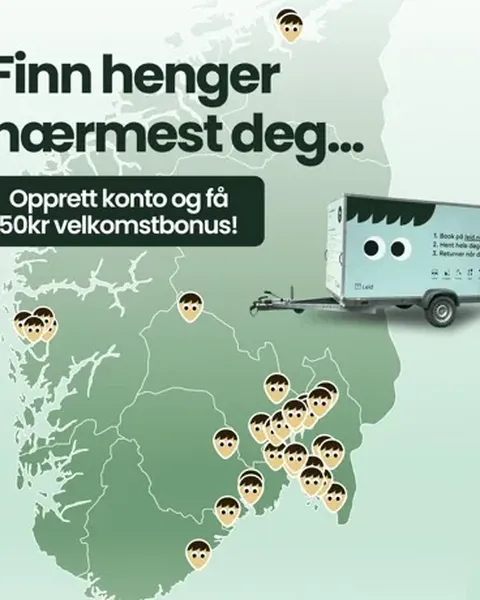
Snapchat is often dismissed as a channel for teenagers. In Norway it reaches widely, including people between 30 and 50. When we ran the ads for Leid.no (trailer rental), we ran Snapchat alongside Google and Meta, and the account ended up at 4.73x ROAS across channels. YouTube and TikTok give cheap reach, but are harder to measure on sales. Test them once the first channel is profitable, not before.
LinkedIn is the only channel where you can target by job title, and the cost per click reflects that. For B2B sales where one customer is worth hundreds of thousands, it can be justified. For most small and medium-sized businesses, Google Search on what the customer calls the service is a better place to start. More about B2B marketing.
Email is the cheapest channel you have, because you reach people who already know you. But the list only grows if the other channels fill it. Organic posts on social media build trust over time, but are rarely what brings a small business new customers this month. Use them to support the ads, not as the main plan.
Before you choose a channel, check how many people actually search for what you sell. Keyword Planner in Google Ads is free and shows the approximate number of monthly searches for “[service] [city].” If a few hundred people a month search in your area, there’s demand you can buy your way into. If the number is close to zero, the demand has to be created, and then Meta is a better start than Google.
Three things give you visibility without an ad budget:
All three take months to work, and they don’t scale like ads. The combination is what works: ads bring in customers now, organic visibility makes them cheaper over time.
Google and Meta have no real minimum price. But smart bidding needs data: Google needs around 15–30 conversions in 30 days in a campaign to set bids well, and Meta around 50 a week per ad set. Work backwards. If an inquiry costs NOK 250 and you want 30 a month, you need around NOK 7,500 a month for that one campaign.
The other cost is management. The accounts need a review every week: search terms, negative keywords, budget and new ads. If you do it yourself, set aside 2–3 hours a week. If you buy it, you pay either a fixed fee, hourly, a percentage of the budget, or a share of the results. How the models differ. We take a share of the value we create, not a fixed monthly fee. It pays off for us when the share comes to around NOK 20–30,000 a month, so we work with established businesses with a monthly ad budget of at least NOK 30,000. How it’s calculated.
Small business? Here’s what to do yourself, buy and skip. Service business? Channel choice, industry by industry.



The numbers come from our clients’ own ad accounts.
See also: Google Ads agency · Meta Ads agency · Performance marketing agency · What is UGC? · Google Ads agency Oslo
Send us your website and we’ll put together a concrete proposal for ads and a landing page for your business, showing how it would look with your brand. You’ll get it by email within a couple of days, and it’s yours to keep either way.

Free · no lock-in contract · we never share your info
Rather talk directly? Book 30 minutes in the calendar → · victor@arcads.no